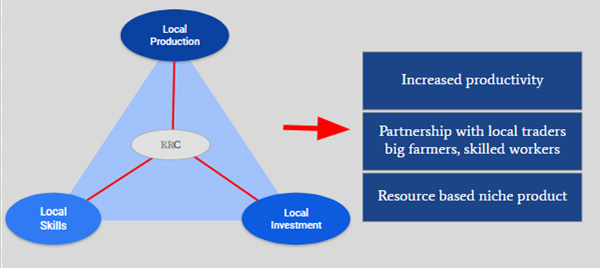
Rural Renaissance Centres
Rural Industrial Parks
Rural Industrial Parks serve as decentralised village production centres, where local SHG and youth can come and engage in a livelihood activity. These centers, apart from focusing on production, also play a key part in development of an entrepreneurial ecosystem with provision of several support facilities to budding entrepreneurs.
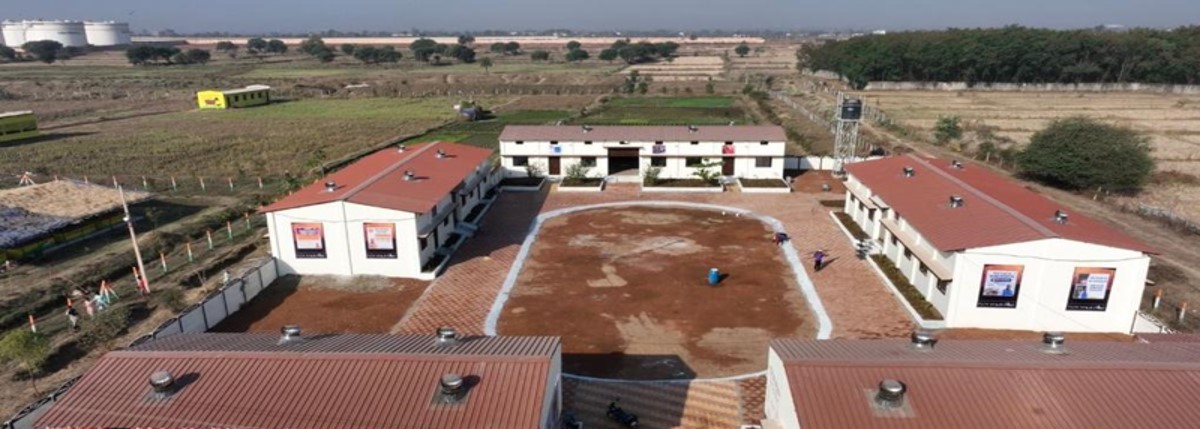
Rural Enterprise Accelerator Hub (REACH)
Rural Enterprise Accelerator Hub (REACH) is a centre which not only helps villagers upgrade their existing skills and learn new trades, but also convert their skills into products of local needs through entrepreneurial activities. It is a dynamic and innovative village production zone, designed to serve the needs of and empower the specific producer community, thereby empowering the village as a whole. It aims to foster a vibrant production and distribution ecosystem through cost-effective modern technology and an inclusive, participatory governance mechanism. These decentralised entrepreneurial centres become hubs of convergence for not only providing skill-based training to women and youth, but also for easing access to institutional credit through involvement of Banks and NBFCs.
The emphasis on traditional crafts within REACH also offers a sustainable source of income to artisans, thereby helping safeguard the cultural heritage of the region. These production centres get supported by Community Development Boards for each artisan group. These boards, with the aid of REACH ecosystem, ensure that the skilling, technical, and technological needs of the artisans are fulfilled, allowing them to fully express themselves.
Each enterprise type within the Rural Enterprise Accelerator Hub helps create a diversified and resilient local economy. REACH with its community-led approach and focus on ecological sustainability, fosters active local participation while ensuring the development initiatives resonate with the unique needs of the region. The key investments in critical infrastructure and enterprise support services through REACH helps create a self-sustaining rural economic ecosystem thereby fostering economic growth, innovation, and job creation in the state.
The emphasis on traditional crafts within REACH also offers a sustainable source of income to artisans, thereby helping safeguard the cultural heritage of the region. These production centres get supported by Community Development Boards for each artisan group. These boards, with the aid of REACH ecosystem, ensure that the skilling, technical, and technological needs of the artisans are fulfilled, allowing them to fully express themselves.
Each enterprise type within the Rural Enterprise Accelerator Hub helps create a diversified and resilient local economy. REACH with its community-led approach and focus on ecological sustainability, fosters active local participation while ensuring the development initiatives resonate with the unique needs of the region. The key investments in critical infrastructure and enterprise support services through REACH helps create a self-sustaining rural economic ecosystem thereby fostering economic growth, innovation, and job creation in the state.
Key features of REACH
- Community-based Technology Transfer: REACH emphasises need-based community-oriented technology transfer, tailoring production and facilitation services to address specific challenges of traditional occupational communities and meet demand and supply requirements.
- Entrepreneurship: REACH encourages individual and group entrepreneurs to produce goods or provide services that contribute to the village economy. Beyond traditional employment, REACH units aim to create diverse business opportunities that leverage the unique skills, values, and leisure time of village members. This approach fosters entrepreneurship and economic diversification.
- Hub for Multiple Villages: REACH units are strategically situated to serve as central hubs in a hub and spoke model, catering to the economic needs of 5-6 Gram Panchayats or villages. This regional approach allows for the efficient aggregation of resources and economic activities.
- Enterprise support facilities: Provision of support facilities such as worksheds, electricity and water connection, training and capacity building, credit support, marketing and branding, WiFi connection is provided through convergence of Union and State Government schemes.
- Wide variety of enterprises: Supporting a range of enterprises such as traditional village crafts, FMCG and daily utility goods, input goods for larger industries, Service enterprises, Digital/ IT-enabled enterprises.
Gauthans
Indian agriculture has traditionally been based on bio-manure. However, with time, this practice and its importance has diminished due to various reasons. Cattle rearing is becoming uneconomical since cattle are seen solely as a source of milk. Moreover, mechanisation of agriculture, leading to reduced utility of non-milching cattle, combined with lack of sufficient land and resources for cattle upkeep has resulted in large-scale abandonment of livestock in the villages. While open grazing and free roaming cattle create bio-stress on the farmlands, lack of a common gathering place for cattle causes issues in provision of veterinary services. Gauthan is thus envisaged as a decentralised biofertilizer production centre, cow dung and cow urine can be collected to be utilised in production of vermi-compost, Jiv-Amrut etc. At the same time, it can also provide a resting centre where the cattle can gather in the daytime after grazing. This place not only provides water, shelter and nutritious fodder but also facilitates the delivery of veterinary services such as vaccination, artificial insemination etc.